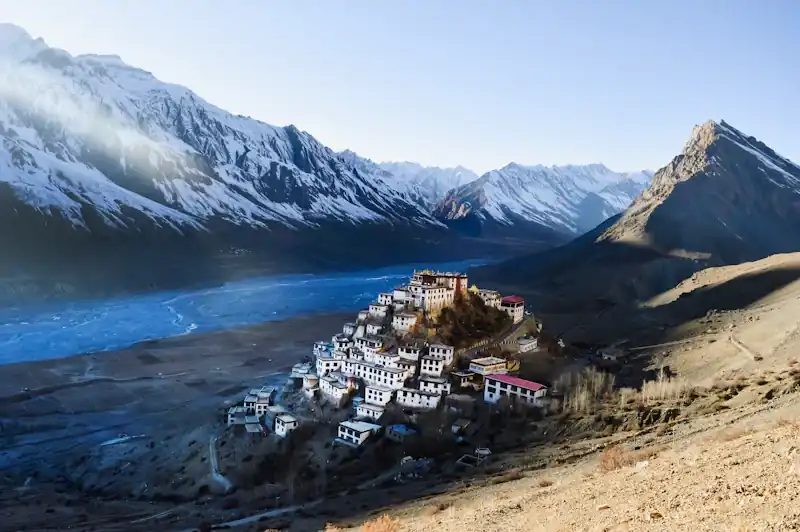
Winter Spiti is quiet, white and unforgettable, and it is also cold, slow and demanding. The people who enjoy it most are the ones who arrive knowing what the days will actually be like.
This guide covers the practical side: roads, temperature, rooms, health and what to bring.
The only road in
In winter the Manali side is closed by snow, including Kunzum La. The way in is the Kinnaur road from Shimla, through Sangla, Kalpa, Nako and Tabo to Kaza. Heavy snow or ice can close sections for a few hours or a few days, so itineraries carry slack. This is why our winter trips run Shimla to Kaza and back the same way.
How cold it gets
Days are often sunny and bright, which feels deceptively mild. Nights are the challenge: temperatures in Kaza and the high villages commonly fall well below -15°C, and in deep winter can be colder. Water pipes freeze, rooms are heated only lightly and getting out of the sleeping bag in the morning is a small act of courage.
| Month | What to expect |
|---|---|
| December and January | Coldest nights, the most snow and the most closures |
| February | Still deeply cold, with longer sunny spells |
| March | Slowly easing, though snow and ice remain |
Rooms, power and money
- Rooms are basic. Heating is usually limited to a stove in the common room or a small heater, and hot water can be scarce.
- Power cuts happen. Charge phones and power banks whenever you can, and keep them warm.
- ATMs and fuel can run out. Carry enough cash for the whole trip and fill the tank when you can.
- Mobile signal is patchy beyond the main towns. Tell family your plan before you leave.
Altitude and cold together
Kaza is at about 12,500 ft, and the high villages go well above that. Cold makes altitude symptoms harder to spot, and altitude makes cold harder to handle. Drink warm fluids often, eat properly and watch for numb fingers and toes, shivering or confusion. Read our AMS guide and tell your guide early if you feel unwell.
What to pack
- Thermal base layers (two sets), a fleece, a down jacket and a windproof shell. See the 3-Layer packing guide.
- Insulated, waterproof boots and warm socks, plus spares.
- Warm cap or balaclava, neck gaiter and insulated gloves with liners.
- Sunglasses and strong sunscreen. Snow glare is intense.
- A power bank, spare camera batteries and a warm pouch to keep them in.
What makes it worth it
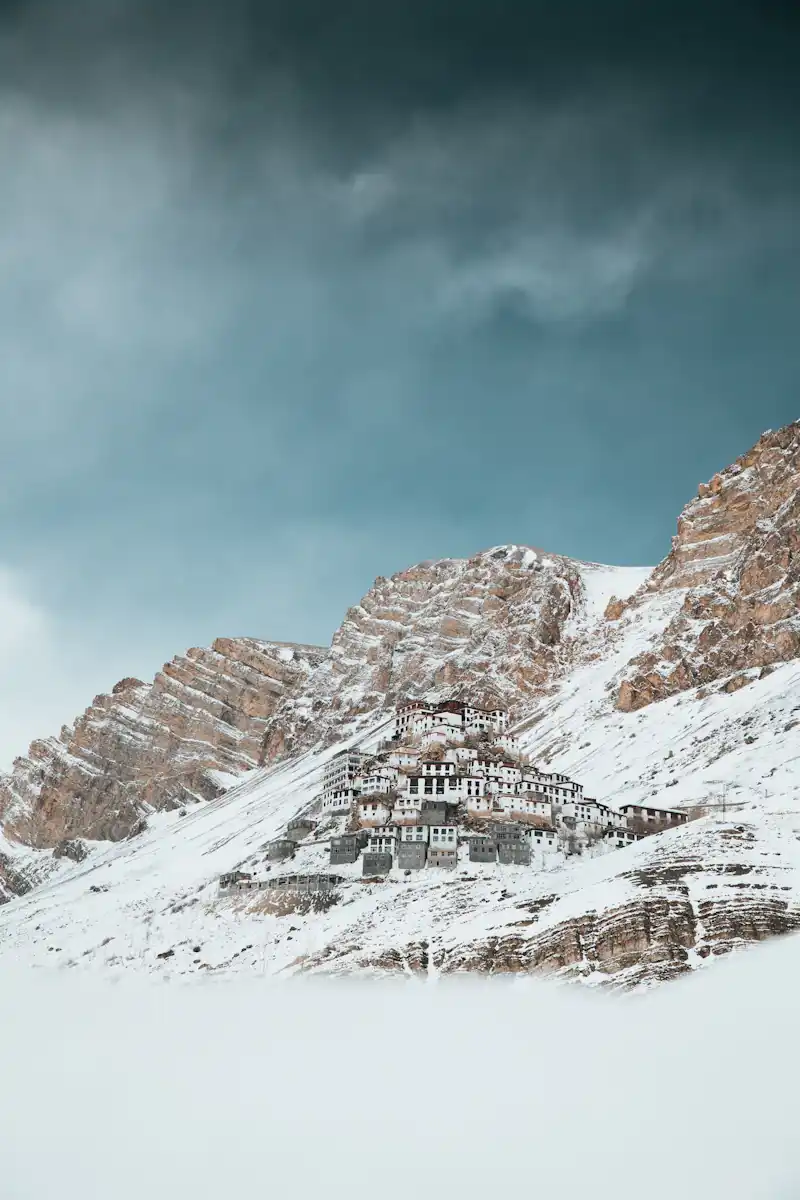
Empty roads, frozen rivers, snow-covered monasteries and some of the clearest night skies you will see. January to March is also when snow leopards are sometimes spotted around villages like Kibber, though sightings are never guaranteed.
Winter Spiti rewards patience. Build in spare days, dress for the night rather than the day and let the road set the schedule.
— Skypath Field NoteSee our winter Spiti trips
A group road trip and a 4x4 expedition, both starting in Shimla.