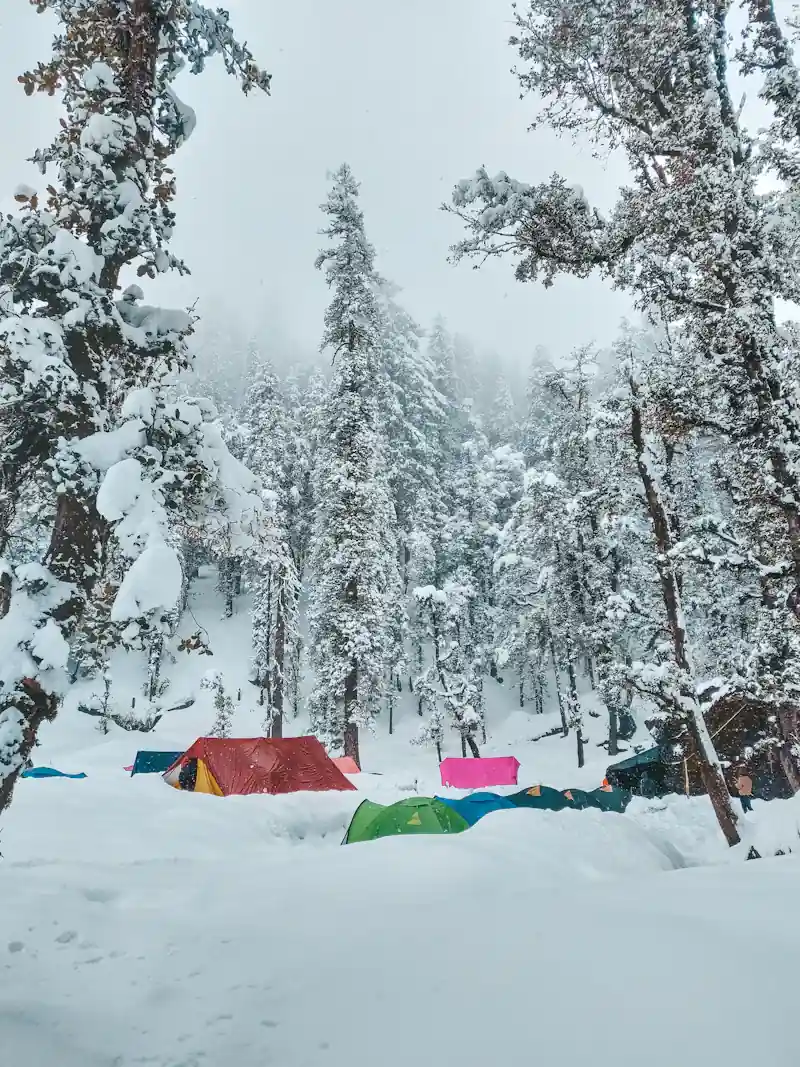
Uttarakhand is where many Indian trekkers see snow for the first time. The forests are close to the road, the camps are in meadows, and the summit days finish with long views of white peaks.
Here are six winter treks worth knowing. Altitudes and day counts differ from one operator to another because routes start from different points, so treat the numbers as rough guides.
The six treks
- Kedarkantha. Starts from Sankri in the Govind Pashu Vihar area and tops out at roughly 12,500 ft. It is the classic first snow trek: pine and oak forest, a lake at Juda Ka Talab, and a summit with a wide ring of peaks. Usually 4 to 6 days from December to April.
- Brahmatal. Begins near Lohajung and reaches about 12,250 ft. Two frozen lakes, Bekaltal and Brahmatal, and views of Trisul and Nanda Ghunti on a clear morning. Usually 5 to 6 days, December to March.
- Dayara Bugyal. A huge high-altitude meadow above Raithal near Uttarkashi, at about 11,800 to 12,100 ft depending on the route. In winter and early spring the whole meadow turns into a snowfield. Usually 4 to 6 days.
- Kuari Pass. A long ridge walk near Joshimath, often called the Lord Curzon Trail, topping out at roughly 12,500 to 12,800 ft. The reward is a close view of Nanda Devi and neighbouring peaks. Usually 5 to 6 days.
- Chopta and Chandrashila. A short, steep walk from Chopta to Tungnath temple, one of the highest Shiva temples in the world, then on to the summit of Chandrashila at about 13,000 ft. Often done in 2 to 3 days, sometimes with Deoria Tal.
- Nag Tibba. A good weekend trek of about 2 days near Dehradun and Mussoorie, with a summit of roughly 9,900 ft. A fair choice if you are testing whether you like winter hiking.
How to choose
- First snow trek: Kedarkantha or Dayara Bugyal. Both have clear trails, short walking days and plenty of camps.
- Lakes and quiet forest: Brahmatal gives frozen lakes and a calmer feel than Kedarkantha.
- Big views, longer days: Kuari Pass is a ridge trek with exposed sections and a bigger sense of distance.
- Short on time: Nag Tibba or Chopta-Chandrashila fit into a long weekend.
What winter really means on the trail
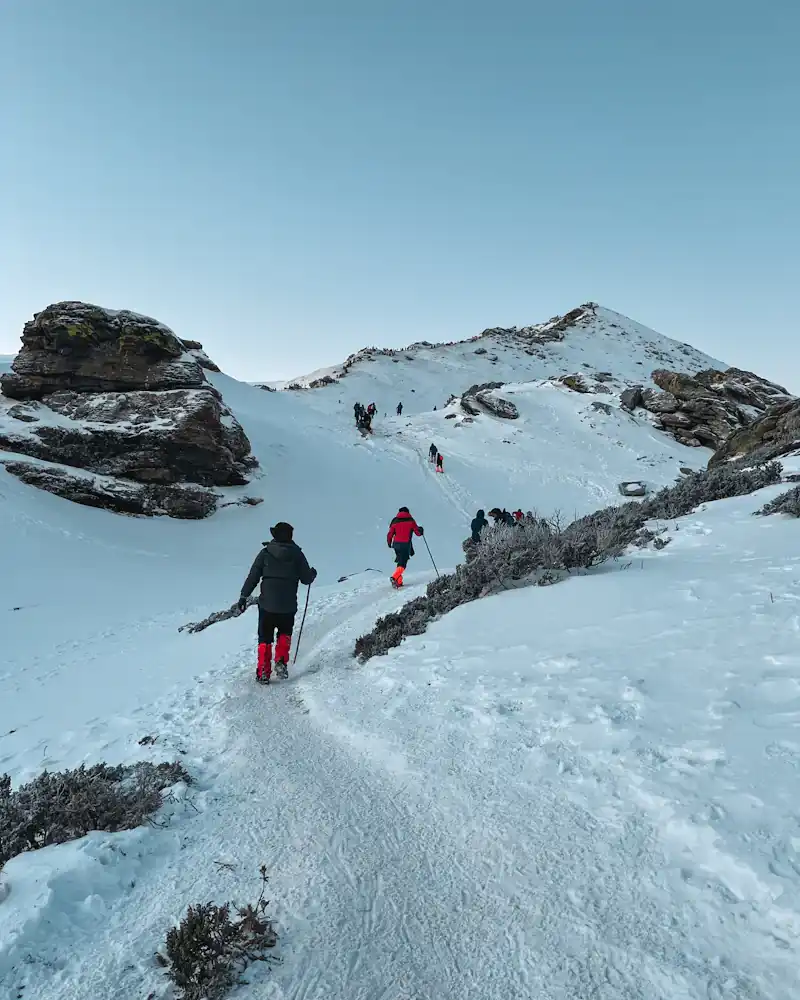
Winter treks are not harder because of the climbing. They are harder because of the cold and the short days. Temperatures at camp can fall well below freezing, boots and gloves can freeze overnight, and trails that are easy in summer become slippery when packed snow turns to ice.
- Footwear matters most. Use waterproof trekking boots with a good grip, plus gaiters. Many operators supply microspikes for icy stretches, so ask before you buy.
- Layering beats one big jacket. A thermal base, a fleece, and a warm outer layer let you adjust as you move. See the 3-Layer packing guide.
- Daylight is short. Start early. A summit day that is easy in June can feel long in January because you lose light by late afternoon.
- Snow can close the trail. Fresh snowfall can make a summit unsafe on the day. A good leader will turn around, and that is a good decision.
When to go
Snow is most reliable from late December to February. March brings longer days and softer snow but the quality of the powder drops, and some trails start to melt out. If you want a first snow trek with the best chance of fresh snow, aim for January. Remember that dates are only a guide. Snowfall changes every year.
A winter trek is a test of how well you keep your hands, feet and mind warm. Pack for the cold you will feel at camp, not the cold you feel in the car.
— Skypath Field NoteWant a winter trip with snow and fewer logistics?
Skypath runs winter Spiti drives and a seasonal igloo stay near Manali. Tell us your dates for a custom plan.