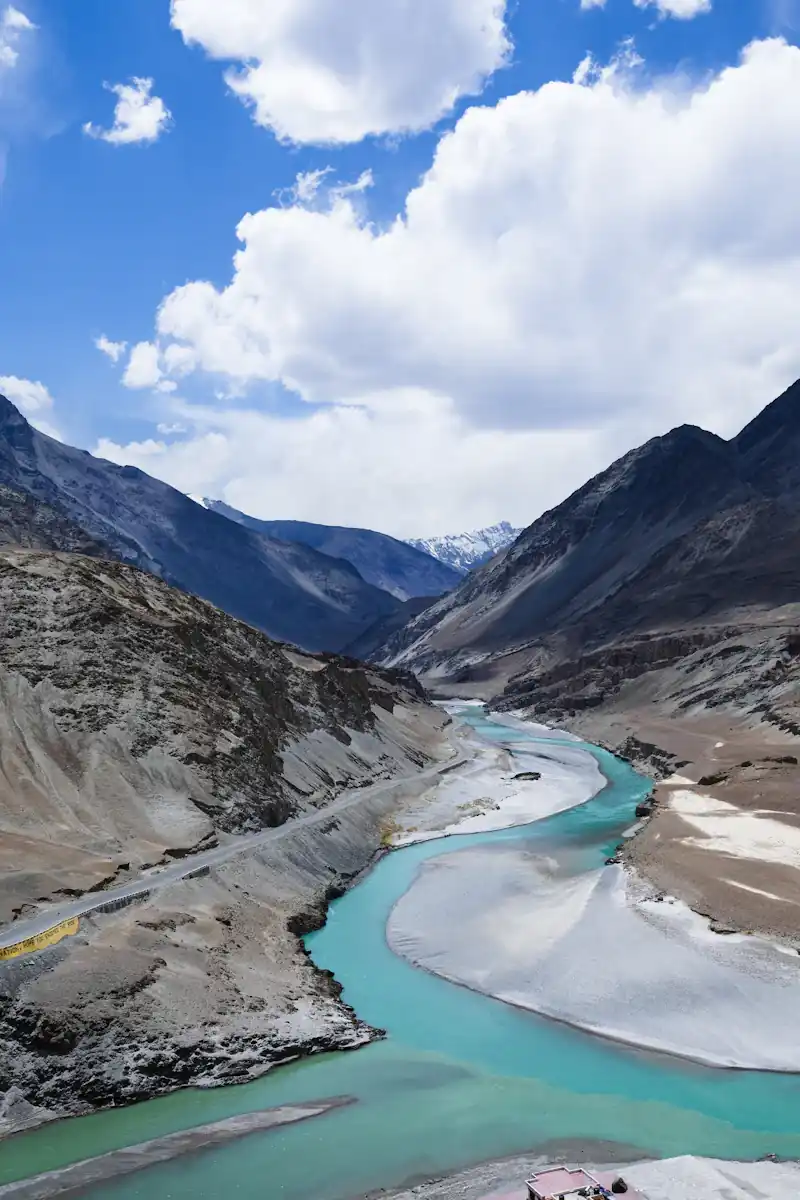
The Markha Valley trek is the classic trek of Ladakh. It follows a river through Hemis National Park, past whitewashed villages and monasteries, then climbs onto a high grazing plateau beneath the Kang Yatse massif before crossing the Kongmaru La at about 17,250 ft.
It combines culture and wilderness, but it is a serious trek: high, cold and full of river crossings.
The classic route
Itineraries vary by operator and by how many days you give acclimatisation, so check the day plan for your departure. The classic shape looks like this:
Spend at least two nights in Leh, at about 11,500 ft, with easy walks and plenty of water.
The trek starts in the lower Markha Valley, at around 10,500 to 11,000 ft, following the river through villages. Stay in village homestays.
Pass Hankar, with its old monastery and a view of Kang Yatse, and climb to higher camps near 13,500 ft.
The highest camp, at around 15,500 ft, set on a broad plateau where herders bring their animals in summer. It is a long, cold night at altitude.
An early start, a steady climb to the pass at about 17,250 ft, then a long descent toward Shang Sumdo and the road back to Leh.
The river crossings
The Markha river is crossed several times. Water is often knee to thigh deep and can be higher at peak melt in the afternoon, and some of the simple log bridges are washed out. Crossings are the reason this trek has a reputation.
- Cross as early as you can. Flow is lowest in the morning.
- Loosen your hip belt and unclip your chest strap so you can drop the pack if you fall.
- Use trekking poles for balance and cross facing upstream. Cross in a group, linking up if your guide says so.
- Wear sandals or neoprene socks. Dry your feet and put on dry socks afterwards.
- If the water is too high, do not push it. Wait, and cross later in the morning or the next day.
Altitude is the real challenge
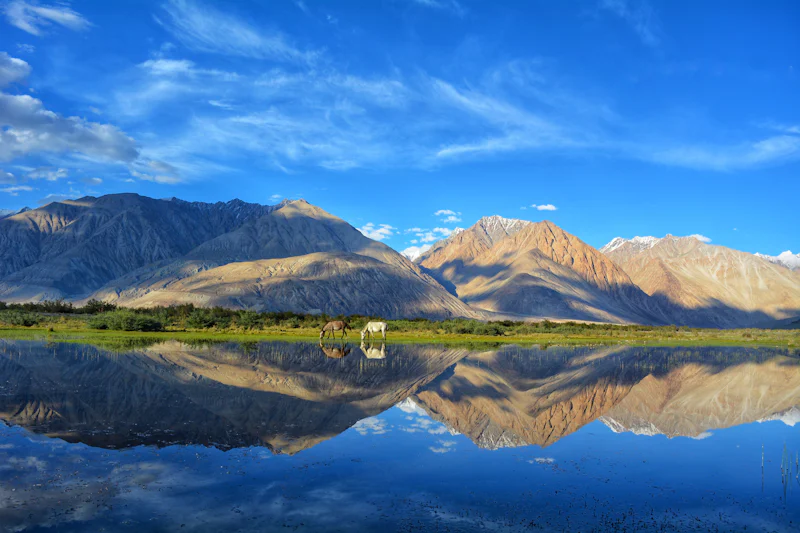
Much of the trek is above 12,000 ft, and the nights at Nimaling and on the approach to the pass are cold. A slow start matters more than fitness. Spend enough days in Leh, drink plenty of water, tell your guide about any headache and read our AMS guide. Use trekking poles on the descent, as the final slope is long and loose.
Where you sleep
In the lower valley, villages such as Skiu, Markha and Hankar offer homestays, which are simple but welcoming. Higher up, at Thachungtse and Nimaling, you sleep in tents. Night temperatures can fall below freezing even in summer, so bring a warm sleeping bag and a proper insulating layer. See the 3-Layer packing guide.
What you will see
Barley fields and small stone villages in the lower valley, monasteries perched on hills, blue sheep on the slopes, and the white summits of the Kang Yatse massif above Nimaling. Hemis National Park is also snow-leopard country, though sightings are rare in summer. There is a national park entry fee at the checkpoint, so carry cash. There is no mobile signal along most of the route.
Markha is a long walk with a hard final climb. Give yourself time in Leh first, and the trek will feel like a reward, not a test.
— Skypath Field NoteExplore our treks
Beas Kund, Hampta Pass, Bhrigu Lake, Friendship Peak and Chandrakhani Pass.