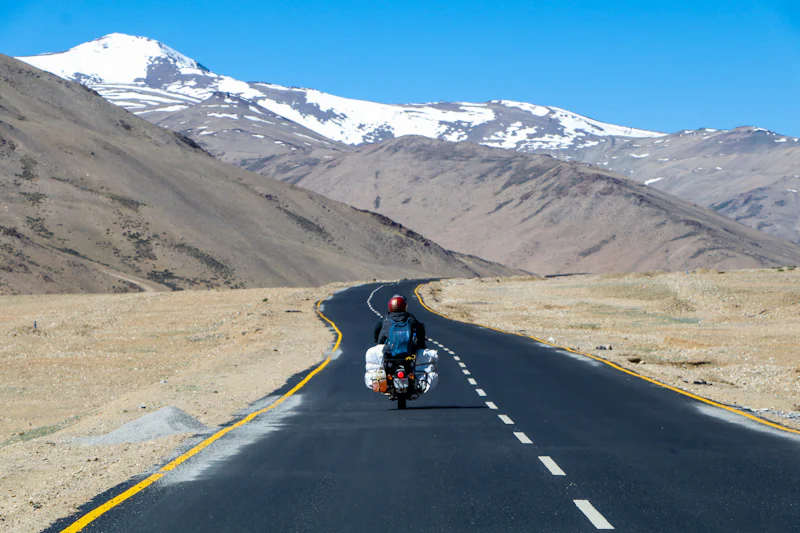
A first Ladakh ride is less about the bike and more about everything around it: the thin air, the cold water, the long gaps between fuel and help. Riders who get this right have the trip of their life. Riders who skip it end up in a support vehicle.
These are the ten things we would want every first-timer to know before the key goes in.
1 to 3: Your body, your fuel, your water
Leh is at about 11,500 ft. Do not ride hard on the day you arrive. Give your body at least a full rest day, and keep to a gradual climb on the road in from Manali. Our Manali – Leh – Manali plan has a rest day in Leh before Khardung La for this reason. Read the AMS guide.
Tandi, before Keylong, is the last reliable petrol pump before Karu, near Leh. That is roughly 365 km, which is more than a single tank on many bikes. Fill up at Tandi, carry spare fuel in a proper approved container if you ride unsupported, and never skip a pump because you "still have half a tank".
Glacial streams such as those near Zingzingbar and Baralacha run low in the morning and high by afternoon as the sun melts the ice upstream. Cross early. Walk the crossing first if you can. Stay in first or second gear, keep a steady throttle, keep your eyes on the far bank and do not stop in the middle. If the water is fast, murky or above the bottom of your engine, wait or use the support vehicle.
4 to 6: Machine and kit
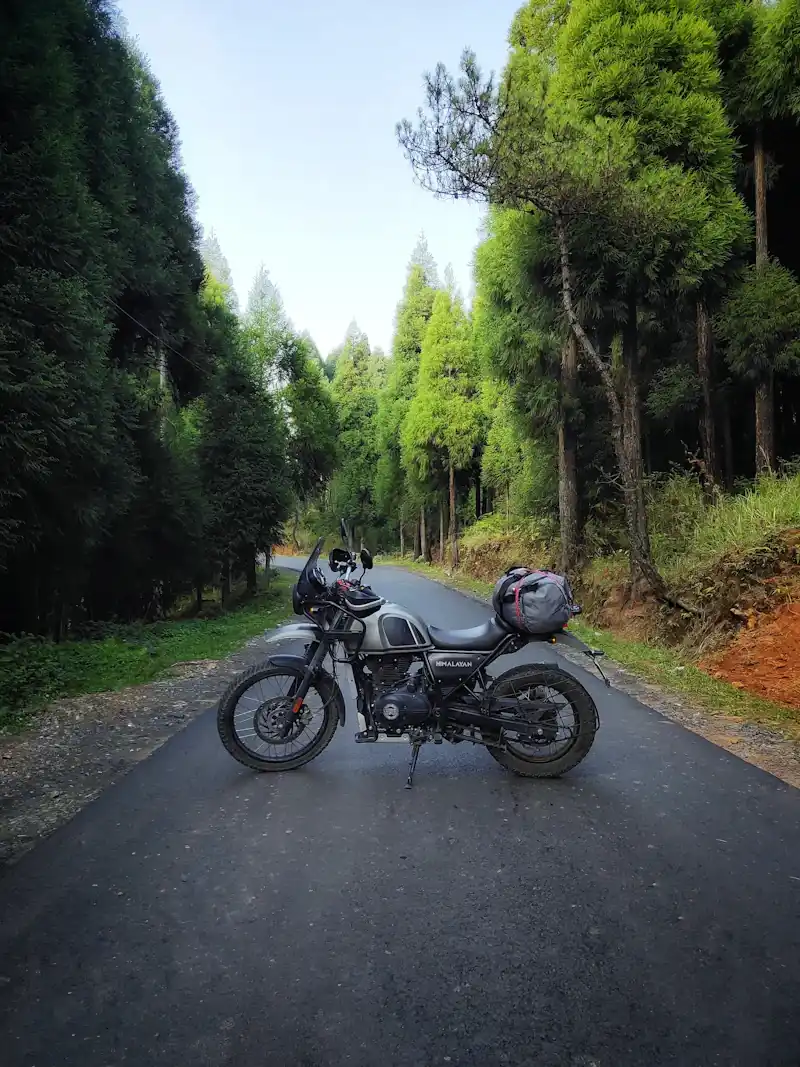
Air gets thinner as you gain height, and a naturally aspirated engine loses roughly 10% of its power for every 1,000 m. Near 5,000 m you may have about half. Fuel-injected bikes such as the Himalayan 450 adjust the fuel mixture themselves, so you do not need to re-jet, but the engine still feels flat. Older carburetted bikes may need jetting for altitude, and then run rich or lean on the way down. Ride in a lower gear, keep the revs up and be patient on climbs.
A clutch cable, an accelerator cable, spare levers, fuses, bulbs, zip ties, chain lube and a tyre repair kit with a compressor will fix most problems. Know whether your bike runs tubes or tubeless tyres and carry the right kit. If you ride with Skypath, our support vehicle carries a mechanic and tools, but you should still know where yours are.
You can leave Manali in 25°C and cross a pass near freezing. Wear an armoured jacket, full-face helmet, gloves and riding boots, with thermal layers and a windproof shell underneath or on top. Cotton is a bad idea in the cold. See the 3-Layer packing guide.
7 to 10: Rhythm, manners and paperwork
Start by 6 or 7 AM. You want to be off the high passes and past the streams before the afternoon, when water rises and weather turns. Plan realistic days (many high-altitude stages are 90 to 250 km, but they are slow). Never ride at night.
Uphill traffic has priority on narrow roads. Sound the horn on blind bends. Army convoys run on these roads; hold your distance and do not try to overtake inside a convoy. Do not stop on a blind corner for photos.
Take originals and copies of your driving licence, RC, insurance, pollution certificate and photo ID. For areas such as Nubra, Pangong and Hanle you will usually need a permit; check the current rules and carry several printed copies.
Heavy luggage ruins handling on loose surfaces. Use soft bags, strap them low and centred, and avoid a heavy rucksack on your back. Ride in a group with a lead and a sweep, and have a plan for a breakdown or an altitude problem. On our trips that is a support vehicle with a mechanic and an oxygen cylinder.
The honest summary
You do not have to be an expert rider. You have to be a patient one: good at slowing down, comfortable with cold, and willing to turn back or rest when your body says so. The mountains do not care about the schedule.
The riders who finish happy are the ones who rest early, drink more water than they think they need and stop when the road says stop.
— Skypath Field NoteRide the Manali – Leh – Manali highway
Twelve days on Himalayan 450s through Jispa, Sarchu, Leh, Nubra and Pangong.