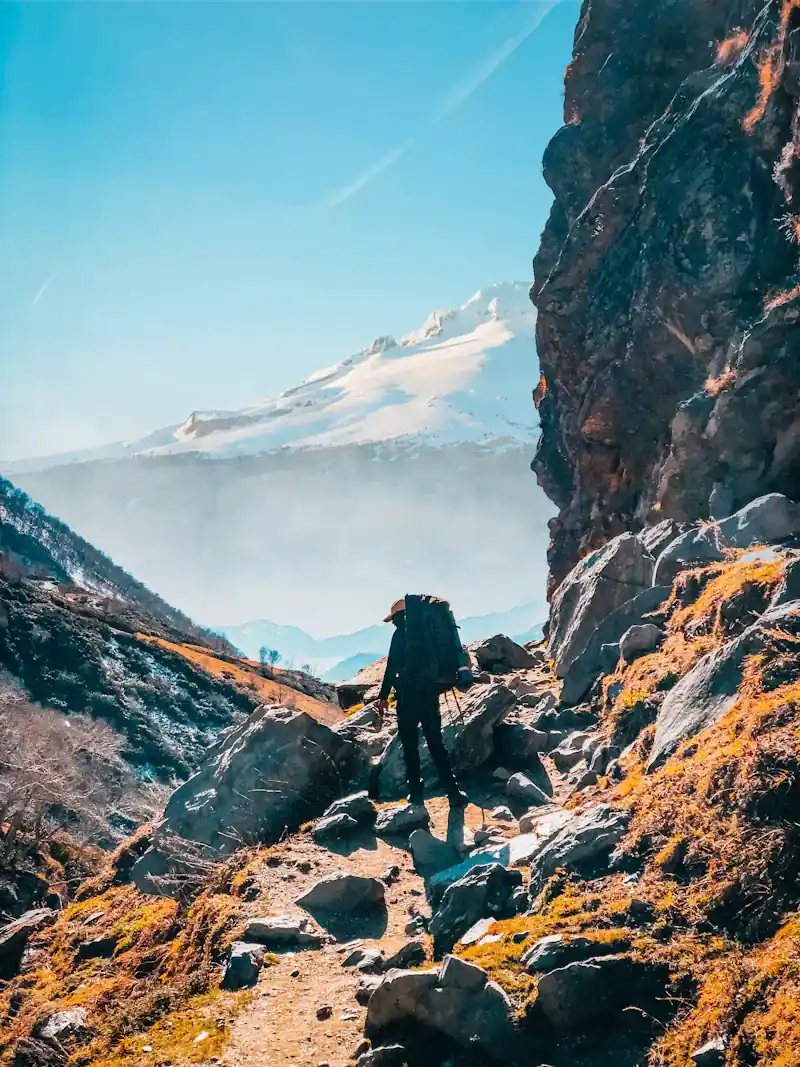
Many first-time trekkers choose a short, easy trail and miss what a Himalayan trek is really about: crossing a high pass and seeing the world change on the other side. Hampta Pass gives you that on a trek that is long enough to feel serious, but gentle enough to complete.
You start in a green valley of pine and deodar and, a day or two later, you step over a ridge into a bare, cold desert. Few treks in India make that change as clear.
Why it works for a first alpine crossing
- A slow build-up. The first two days stay well below the pass: Jobra to Chika at about 9,800 ft, then Balu Ka Ghera at about 11,900 ft. By pass day your body has had time to adjust.
- A real pass, with a clear goal. Hampta Pass at 14,100 ft is high enough to feel like an achievement without the risk profile of a 16,000-ft crossing.
- An easy start and an easy exit. The road head is close to Manali, and the finish at Chatru connects by vehicle to Chandratal and back to Manali through the Atal Tunnel.
- A drama that needs no explanation. The shift from Kullu to Lahaul happens in a few hours of climbing, and it is why people come back for more treks.
Day by day
A drive up through hairpin bends, then an easy two-hour walk through deodar, pine and birch to the Chika meadow camp beside a stream.
About five hours on boulder trails and alpine meadows, with a cold stream crossing, to a sandy riverbed camp surrounded by peaks. This is the launch point for pass day.
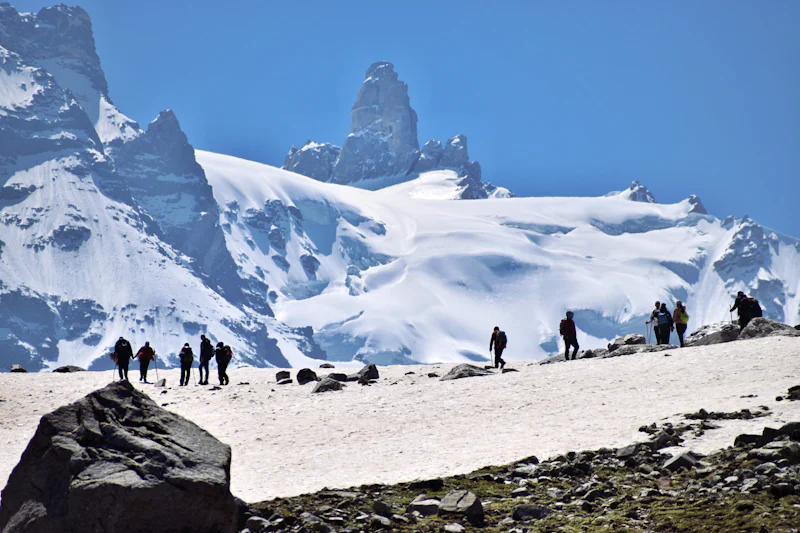
The big day. A pre-dawn start, a steep climb on scree and snow, and the ridge at 14,100 ft with the green valley behind you and the dry Lahaul valley ahead. Then a long descent to Shea Goru at about 12,900 ft. Plan for about eight hours.
A walk down the moraine, a stream crossing, then a drive over rough roads to the moon-shaped Chandratal lake at about 14,000 ft before returning to Chatru.
A drive back through Lahaul, past Sissu and through the Atal Tunnel, reaching Manali by late afternoon.
What is actually hard
Calling a trek "beginner friendly" can hide the difficult parts, so here they are:
- Pass day is long. It means eight or more hours, an early start and a steep, loose descent. Sore knees are common.
- Cold water crossings. Streams are freezing and run higher in the afternoon. Your guides will teach you the crossing technique, including crossing as a group.
- Cold nights. The nights at Balu Ka Ghera and Shea Goru are above 11,000 ft. You will need a warm sleeping layer and a proper insulating jacket. See the 3-Layer packing guide.
- Altitude. Hampta is gentle, but it is still above 14,000 ft. Drink plenty of water and tell your guide early if you feel unwell. Read the AMS guide.
Getting fit for it
You do not need to be an athlete, but you should not arrive untrained. Start four to six weeks before the trip. Build up to a steady 5 km jog in about 35 to 40 minutes, add stair or hill walks with a loaded backpack, and include a few long weekend hikes. Strong legs and steady breathing matter more than speed.
When to go
The main season runs from June to September. Early in the season there is more snow on the pass, which is beautiful but slower. Mid-summer brings rain on the Kullu side, while the Lahaul side stays much drier. September usually gives the clearest skies.
Pass day is not a race. Walk slowly, keep your breathing steady and eat and drink on schedule. The people who enjoy the summit are the ones who still have energy for it.
— Skypath Field NoteTrek Hampta Pass with certified guides
Five days from Manali, including a drive to Chandratal lake.