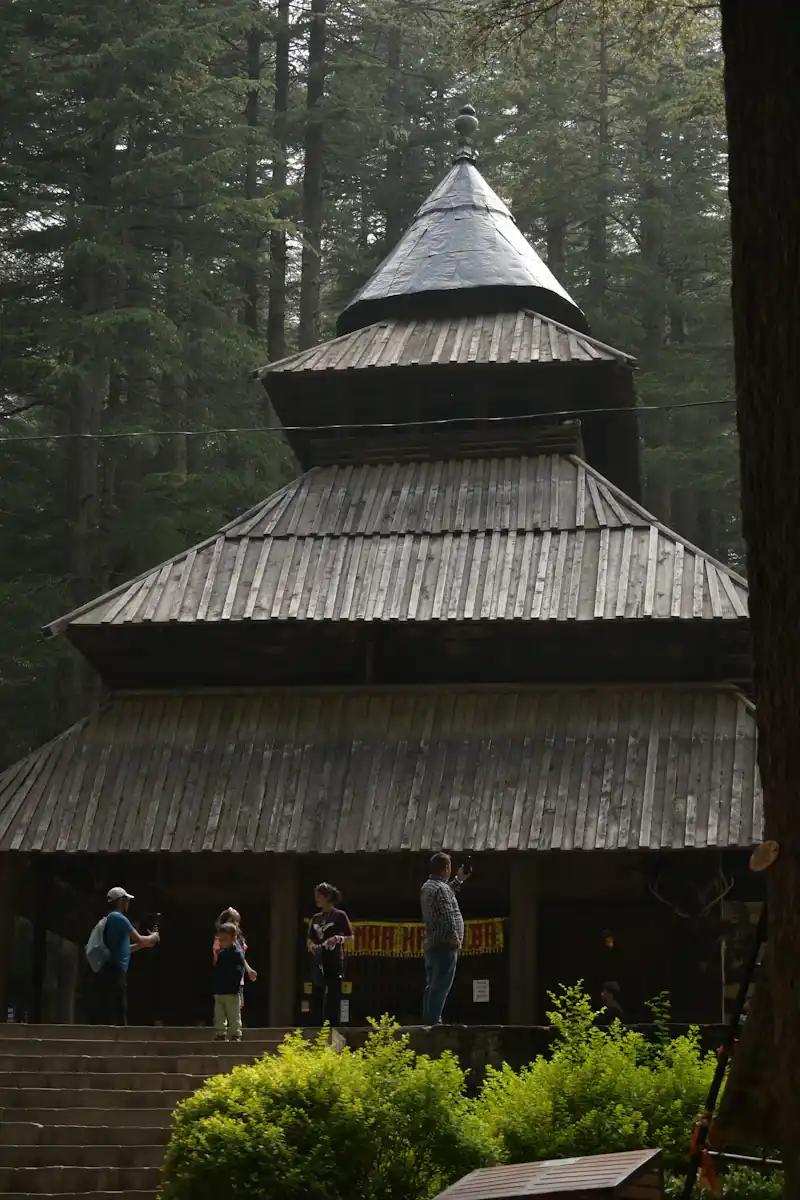
Walk up through the tall cedars of Manali and a dark wooden temple appears between the trunks. It does not look like most Indian temples. There are no stone towers here. The roofs rise in layers like a pagoda, and the walls are old timber and stone.
This is the Hadimba (also spelled Hidimba) Devi Temple, built around a cave and a rock, and tied to one of the Mahabharata's most unusual characters.
The legend of Hidimbi
According to the Mahabharata, a demoness named Hidimbi lived in these forests with her brother Hidimb. During their exile the Pandavas passed through, and Hidimbi fell in love with Bhima, the strongest of the brothers. Her brother tried to stop them and was defeated by Bhima.
Hidimbi and Bhima married, and their son was Ghatotkacha, who later fought in the Kurukshetra war. When the Pandavas left, Hidimbi stayed behind, and local tradition says she meditated here until she was honoured as a goddess. A small shrine to Ghatotkacha stands close to the main temple.
The temple and its history
- Built in 1553. Most accounts credit Maharaja Bahadur Singh of Kullu with building the present temple around the older cave shrine.
- A wooden pagoda. Tiered wooden roofs, topped with a brass cone, rise above a whitewashed stone base. The style is typical of the hill temples of Kullu, built to handle heavy snow.
- Carved doors. The doors and wall panels carry carvings of animals, dancers, deities and scenes from Hindu tradition.
- A rock at the centre. The shrine is built around a large rock, and a carved footprint of the goddess is worshipped inside.
- A royal link. Hidimba is traditionally regarded as a family deity of the Kullu rulers, which is why the temple still has deep local standing.
A folk story, often told but not documented, says the king had the craftsmen stopped from building anything like it again. Treat that as folklore.
Festivals and the best time to visit
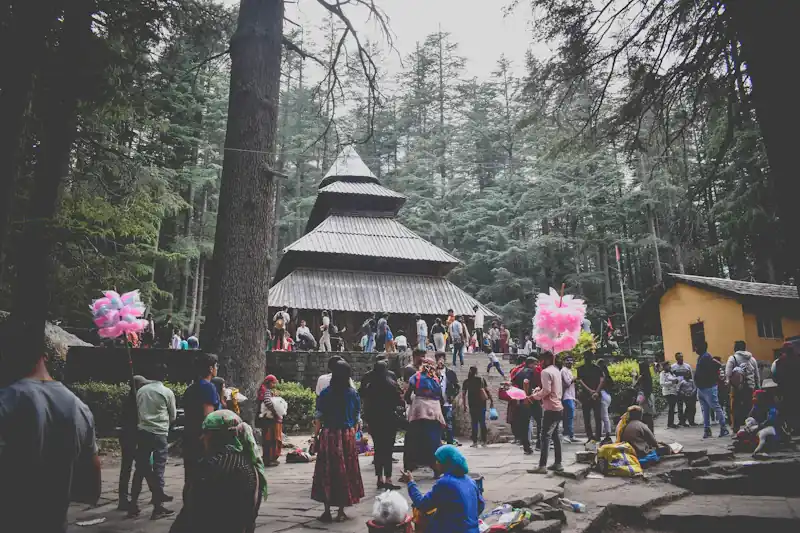
- Navratri. Local devotion peaks during Navratri, when the temple draws large crowds.
- A spring fair. A fair is held around the start of spring, usually remembered as the Dhungri mela, though dates vary by year.
- Best hours. Early morning is the quietest and the forest light is beautiful. Weekends and holidays are busy.
Visiting with respect
- Dress modestly and remove shoes. Follow signs and the guidance of temple staff.
- Be careful with photographs. Check what is allowed near the shrine.
- Look beyond the temple. The cedar forest around it is part of the experience, and the nearby shrine and museum add context.
See more of Manali with us
Combine Hadimba with Old Manali, Vashisht and a day in the Beas valley, or plan a longer trip.